Spiders enter Gwinnett County residences primarily to hunt primary prey populations such as silverfish, fungus gnats, and subterranean beetles. Properties nestled near heavy mature tree canopies in Chandler Woods,…
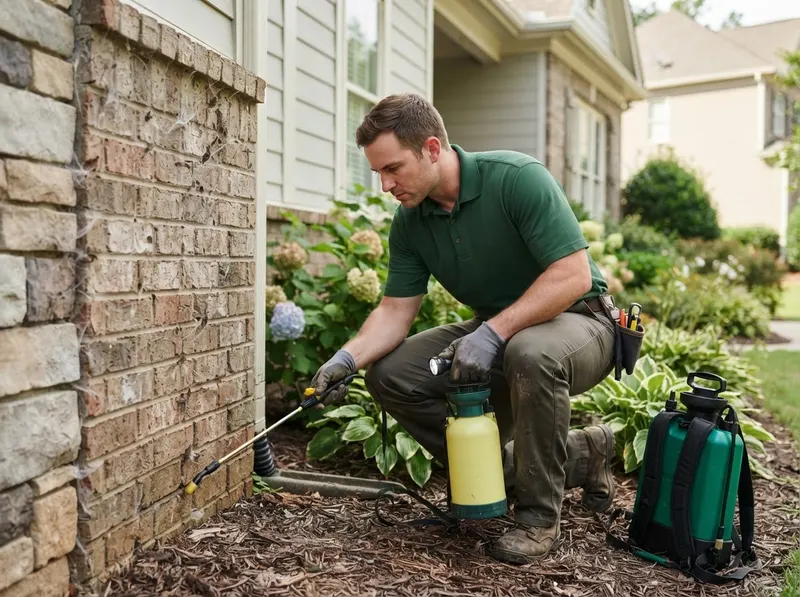
Spiders enter Gwinnett County residences primarily to hunt primary prey populations such as silverfish, fungus gnats, and subterranean beetles. Properties nestled near heavy mature tree canopies in Chandler Woods, Bramlett Forest, and Woodhaven face persistent influxes of nocturnal hunting species such as wolf spiders (Lycosidae) seeking moisture in damp crawlspaces, walk-out basements, and attached garage corners. Unlike web-builders that stay anchored in ceiling corners, hunting spiders move along carpet tack strips, behind baseboards, and inside utility pipe collars. Addressing spiders requires reducing both the current arachnid population and the secondary insects sustaining them, combining physical removal with targeted biological disruption.
For suburban split-levels and slabs in River Oak Village, Castlegate, and Freeman Crossing, service structures depend on architectural layout. Crawlspace foundations require micro-encapsulated dusts injected into cinder block voids and sill plate junctures, while monolithic slab homes require focused exterior band applications 3 feet up the brick ledge and 3 feet out onto the soil foundation. If structural foundation vents lack fine-mesh screens, spiders enter freely during seasonal cold snaps in autumn. Installing physical 20-mesh hardware cloth stops mechanical entry, while chemical barriers disrupt sensory organs on leg tarsi, prompting active retreat before webs or egg sacs anchor in living areas.
Properties bordering natural drainage basins near Pew Creek, Abington Green, and Huntington often register heavy concentrations of orb weavers (Araneidae) across covered front porches, second-story eaves, and soffit vents. Treatment follows three sequential steps: 1. Mechanical sweep using extendable 24-foot electrostatic poly-bristle poles to break down webbing and retrieve viable egg sacs. 2. Targeted micro-crack injections around exterior window headers, door thresholds, and siding transitions to halt hidden recluses and sac spiders. 3. Foundation micro-barrier placement up to moisture barriers. The operational trade-off centers on treatment persistence: exterior treatments directly exposed to UV sunlight and red Georgia clay rain splash degrade faster than protected interior basement applications, requiring scheduled perimeter refreshes every 60 to 90 days for continuous defensive coverage.
Every job gets a firm, written price after a free on-site visit.
Tell us about your spider control job in Lawrenceville and we'll send a clear, written quote, usually the same day.
 Peachwood Pest Control